Blog
Puppy Potty Training Schedule by Age: A Week-by-Week Guide
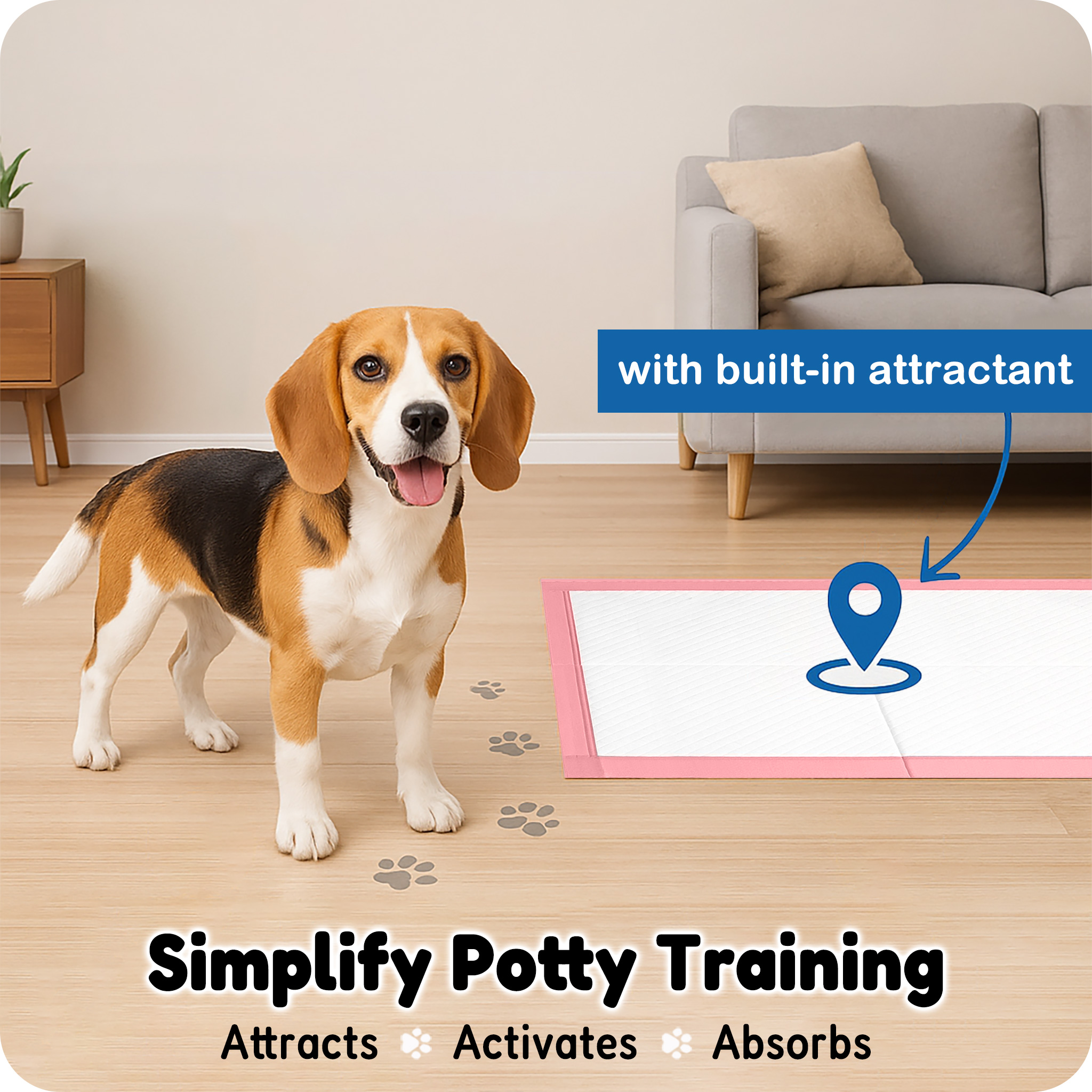
Most puppies can be reliably pad- or outdoor-trained within 4 to 6 months — but only if the routine matches their bladder. Here is the schedule that works, week by week.
The Golden Rule: Take Age in Months, Add One
A puppy can usually hold its bladder about (age in months + 1) hours during the day. An 8-week-old (2 months) ≈ 3 hours. Plan your takeaways around that — never expect more.
8–12 Weeks: Foundation
- First thing in the morning, last thing at night, and after every nap, meal, and play session.
- Carry the puppy to the pad or yard — do not let it learn to wander.
- Use one consistent spot; scent marking speeds recognition.
3–4 Months: Building Reliability
Takeaways drop to roughly every 3 hours plus the five critical moments (wake, eat, play, pre-bed, post-crate). Praise within 2 seconds of success — later and the puppy will not connect it.
4–6 Months: Fading the Pads (or Not)
If your end goal is outdoor-only, gradually move the pad toward the door, then outside. If you are keeping an indoor pad setup (apartments, senior owners, winter climates), simply continue with the 4-month routine — many households keep a permanent pad station, and that is perfectly healthy.
Pad Placement: Three Rules
- Quiet but reachable — not the busy hallway, not behind closed doors.
- Away from food and bed — dogs refuse to soil where they eat and sleep.
- Fully anchored — a pad that slides teaches puppies that "near the pad" counts. Use a holder or our pads' grip texture with a quality 6-layer pad so one accident never leaks through.
- Punishing after the fact. The puppy cannot connect scolding to an accident from an hour ago. It only learns to hide from you.
- Cleaning with ammonia-based products. Ammonia smells like urine and invites re-soiling. Use enzyme cleaner.
- Changing pad brands mid-training. Sudden texture or scent changes can reset progress.
- Too much freedom too soon. Unsupervised roaming = hidden accidents = slower learning.
- Skipping the post-meal takeaway. Most puppies need to go 5–15 minutes after eating. Set a timer.
5 Mistakes That Slow Training Down
When to Talk to a Vet
If a 5-month-old puppy is still having multiple daily accidents despite a consistent routine — or urine seems unusually dark or strong — check for a UTI. Medical issues are mistaken for training failures more often than you would think.
Consistency beats intensity: ten correct repetitions a day for a month will outperform any shortcut. Stock your pad station before day one — see the 200-count bulk pack so you never run out mid-week.